Here's the deal. You don't have a knowing doing gap because you're lazy. You have a knowing doing gap because you've been thinking other people's thoughts for so long that your body forgot what one of your own feels like. And the behavioral science backs that up harder than you'd expect.
You already know what to do. You could write the plan on a napkin in thirty seconds. You could teach it to a stranger at a bus stop and they'd nod along. And you still can't make yourself do the thing. Not today. Not Monday. Not ever, at this rate. You open the tab, you feel the weight, you close the tab. You tell yourself you'll start on Monday and Monday shows up and you are not the person who starts.
For the search engine version: the knowing doing gap is the distance between understanding what to do and actually doing it. The term was popularized by Stanford professors Jeffrey Pfeffer and Robert Sutton in their 2000 book published through Stanford GSB and Harvard Business School Press. Psychologists call the same thing the intention-behavior gap, and a 2022 review in Frontiers in Psychology found that even a medium-to-large change in intention only produces a small-to-medium change in actual behavior, about d+ = 0.36 across 47 experimental tests. That's the hard number on how badly thinking fails to become doing.
Now here's the version the search engine doesn't know. The gap lives in a dimension the self-help industry pretends doesn't exist, and every book on earth promises to close it from inside the one dimension that can't. I'm going to show you three things the top ten results on this keyword never put in the same room. The actual behavioral research. The ancient philosophical root. And a visceral move you can run tonight.
No homework. No steps. By the end of this post the problem is going to look different and you're going to see why you could never force it to move.
Jump to Section:
- What the Knowing Doing Gap Actually Is
- What the Science Actually Says About the Knowing Doing Gap
- The One Distinction That Closes the Knowing Doing Gap
- Why Every Course You Buy Makes It Worse
- Indecision Is a Skill You Have Been Practicing
- The Four Dimensions of Reality and Why You Are Trapped in One
- The Ant, the Grasshopper, and the Cricket
- How to Actually Close the Gap in One Move
- Why Productivity Tools Can't Touch This
- What to Do Tonight
- Frequently Asked Questions
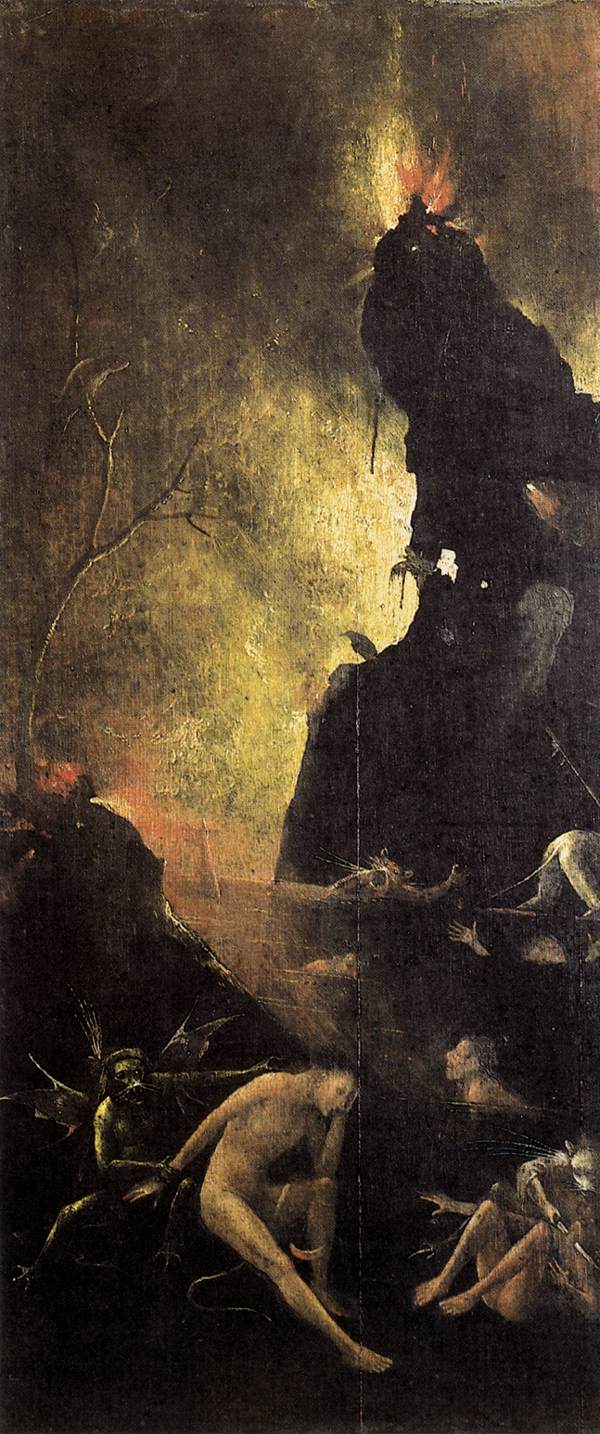
What the Knowing Doing Gap Actually Is
Look at you. You're so smart. You're so unique. Your situation is why you can't be a success and you have the perfect evidence. You've been researching it. TikTok told you what's wrong with you. Your therapist is just confirming the identities you keep feeding them, because you're smart enough to manipulate your therapist. Your situation is just so special.
It's not like there was some drunk Russian guy named Dostoyevsky who wrote about you in a book in 1864. Notes from the Underground. And boy are you underground. His narrator opens the thing by announcing, "I swear, gentlemen, that to be too conscious is an illness, a real thorough-going illness." That's not me saying that. That's Dostoyevsky in the Constance Garnett translation, public domain on Project Gutenberg. He described your paralysis for 150 pages, 162 years ago, in a language you don't speak. You're not as original as you feared.
Here's what the knowing-doing gap actually is. It's the distance between the version of you who read the thing and the version of you who does the thing. Most people think that distance is made of willpower. The real material is something else. It's made of thoughts you bought and mistook for your own. When a thought is yours, you act on it. When a thought belongs to somebody else and you've been renting it, your body knows the difference even if your mouth doesn't.
That's why you can explain the whole plan and still not move. The plan is somebody else's. You've been carrying it around like a library book you keep forgetting to read. Dostoyevsky's Underground Man does the same thing. He describes his paralysis in exquisite detail for a hundred pages. He never moves. He dies inside the description. That's what being over-conscious does to a person. The disease Dostoyevsky named is the one you caught.
The knowing doing gap is the distance between a thought you thought and a thought you bought. Your body knows the difference. That's why the plan never moves.
The organizational version of this is older than most of your books. Pfeffer and Sutton, the Stanford guys who put the phrase on the map, open their research with one of the cleanest sentences anybody has written about this problem. "When confronted with a problem, people act as though discussing it, formulating decisions, and hashing out plans for action are the same as actually fixing it." They called it the smart talk trap. Companies fall into it. So do humans. You can be extremely well read, extremely well spoken, extremely smart, and still spend a decade stuck. Smart talk feels like progress even when nothing moves.
Check this out. The reason you can't name the gap accurately is because the self-help industry sells the wrong diagnosis on purpose. If the diagnosis were correct, you'd stop buying the cure. So the industry keeps you in the library with a fresh stack of books every year. Fresh framework. Fresh execution gap. Same you, still underground. If you want the full teardown of why that whole machine fails on contact with a real life, the free AI at HypnoChat will walk you through it in your own words.
Five signs you have the knowing doing gap
- You can teach the method you can't practice. Strangers would walk away impressed. You'd walk away from yourself unchanged.
- Your Kindle is a graveyard. Every book 80 percent highlighted, 0 percent executed.
- You feel smarter every week and your life looks identical. The feed is moving. The needle isn't.
- You buy a new framework whenever the old one stops feeling like progress. Not when it stops working. When it stops feeling.
- Your "start Monday" list is older than your longest relationship.
This isn't a new problem. It's a very old problem wearing a new costume. Aristotle called the same thing akrasia, acting against your own better judgment, and he was writing about it in roughly 340 BCE in Book VII of the Nicomachean Ethics, as catalogued in the Stanford Encyclopedia of Philosophy's entry on weakness of will. His definition is cleaner than anything modern self-help has produced: a state in which someone intentionally performs an action while simultaneously believing a different course of action would be better. If that's not you on a Tuesday morning, I don't know what is. Every generation finds a different way to buy thoughts instead of think them. Yours just happens to have infinite free ones delivered to your phone.
What the Science Actually Says About the Knowing Doing Gap
Most of the top results for this keyword handwave the research. They cite one book, gesture at some examples, and call it a day. I'm going to put the actual numbers on the table, because once you see the numbers you stop arguing with yourself about whether you're special.
Paschal Sheeran at the University of Sheffield has been running the hard math on this for twenty-something years. A 2022 review in Frontiers in Psychology aggregated his work across 47 experimental tests and found that a medium-to-large shift in intention only produces a small-to-medium shift in behavior, averaging d+ = 0.36. Read that sentence twice. You can double your motivation and your body barely flinches. The intention-behavior gap is not a moral failing. It's a measured effect size, repeatedly, across populations, across outcomes.
d+ = 0.36
Average behavior change from a medium-to-large change in intention, 47 experimental tests
Webb and Sheeran, via Frontiers in Psychology, 2022
Sheeran went further. He broke the non-movers into a population he called inclined abstainers. People who fully intend to change, and do not. A 2022 PMC review quoting his 2002 foundational work found that almost the entire intention-behavior gap is driven by this one group. You are not a lazy person pretending to want something. You are an inclined abstainer. Your wanting is real. Your doing is broken in a specific, named, diagnosed way. That's oddly comforting once you sit with it.
Piers Steel's 2007 meta-analysis in Psychological Bulletin, The Nature of Procrastination, crunched 691 correlations and found the strongest predictors were task aversiveness, task delay, low self-efficacy, and impulsiveness. None of those are fixed by more information. Reading another book on productivity is the equivalent of polishing the dashboard of a car that won't start. It's activity. It's not motion.
Peter Gollwitzer at NYU has spent his career on the fix. His 1999 paper Implementation Intentions: Strong Effects of Simple Plans, in American Psychologist, and the 2006 meta-analysis that followed it, found that if-then plans produced a medium-to-large effect, d = 0.65, across 94 studies, on closing the gap between goal intention and action initiation. As Gollwitzer put it, if-then planning substantially increased the likelihood of initiating action compared to merely forming goal intentions. That's the behavioral science version of what we're about to do.
d = 0.65
Effect size of implementation intentions on closing the intention-behavior gap, 94 studies
Gollwitzer and Sheeran, via American Psychologist, 1999
You want a visceral stat. A 2019 Inside Higher Ed summary of a Science study by Reich and Ruiperez-Valiente found that only 3.13 percent of people who register for a massive open online course in 2017-18 actually complete it, down from roughly 6 percent a few years earlier. Worse, the same reporting cites Katy Jordan's MOOC tracking showing 52 percent of registrants never even start. The doing dies before the first click. This is the knowing-doing gap at industrial scale. Millions of people, billions of dollars, and less than one in thirty of them finishes the thing they paid for.
Scale it up. Custom Market Insights projected the US self-improvement market at $16.5 billion in 2024. Sixteen and a half billion dollars spent knowing. A much smaller number spent doing. That's the ratio of the problem we're in.
Here's the painful one. We've known the answer to the biggest life question for almost a century. The Harvard Study of Adult Development, reported in the Harvard Gazette, has been running for 87 years. It's the longest study of happiness ever conducted. Robert Waldinger, the current director, is crystal clear on what it found. "The clearest message that we get from this 75-year study is this," Waldinger says. "Good relationships keep us happier and healthier. Period." Relationship satisfaction at age 50 predicts physical health at age 80 better than cholesterol does. The knowing has been solved for a lifetime. The doing is still open. You don't have a knowledge problem. Nobody does.
You can double your motivation and your body barely flinches. That's not a moral failing. It's a measured effect size, d+ = 0.36, repeatedly, across populations, across outcomes.
The third leg of the stool is neuroscience. Wolfram Schultz, in his 2016 review Dopamine Reward Prediction Error Coding on PMC, showed that dopamine neurons fire on the difference between expected and received reward. Prediction, not just payoff. This is the neural basis for motivation and learning. For our purposes, one implication matters: anticipation alone can trigger reward signaling. When you vividly imagine doing the thing, your brain can discharge part of the motivation budget before your body moves. That's not the same as "imagining pays out the full dopamine of doing." It's subtler than that. It's that the reward system is predictive, and predictions feel like progress. The self-help industry has monetized that prediction error. Every book, every course, every twenty-minute podcast, feeds the prediction, and the prediction alone is almost satisfying enough. Almost.
Stack these findings and the picture clarifies. Intention is a weak lever. Inclined abstainers are the whole population. Procrastination has nothing to do with laziness. If-then plans work. MOOC completion is single digits. The knowing has been solved. The doing has not. And the nervous system will happily spend your motivation budget on a vivid fantasy before you ever stand up. That is what the science actually says about the knowing doing gap, and not a single top-ranking page on this keyword assembles it in one place.
The One Distinction That Closes the Knowing Doing Gap
There's a huge difference between a thought that you thought and a thought that you bought. You got indoctrinated in a system for eighteen to twenty four years that taught you not to notice that, and to just run every idea through the same gate. They are very much not the same thing.
Before we go further, just understand the neuroscience accurately. When you read about something, take a course on something, or imagine yourself doing something, your brain's reward system doesn't cleanly separate the imagining from the doing. Schultz's reward prediction error work shows dopamine neurons fire on anticipation, not just on the payoff. So the anticipation alone can feel like motion. The receipt prints. The body says something happened. And you wonder why you can't make yourself do the thing, because as far as your nervous system is concerned, you already spent part of the motivation budget on the fantasy. That's the subtle form of the claim, and it's the form the Schultz 2016 PMC review actually supports. Not "imagining is the same as doing." Closer to "imagining pays down part of the debt the body was going to collect for doing."
So you sit there thinking, because you're so smart, reading ideas all the time and trading tomorrow's motivation for today's insight. You get the anticipation hit. You move nothing in the material world. Sheeran's inclined abstainer. Steel's task-aversive procrastinator. Aristotle's akratic. They're all the same person. They're you on a Sunday afternoon deciding to start tomorrow.
494
People running their knowing doing gaps through HypnoChat
Ask a Wizard, 2026
A thought you thought is a thought you had to build out of raw material. You watched. You listened. You noticed the shape of something in your own life. The thought came up inside you because the conditions in you made it come up. That thought has weight because it has roots. You did the work of growing it.
A thought you bought is a thought somebody handed you. Somebody with a book deal. Somebody with a course. Somebody with a podcast. You took it, felt the anticipation burst, stacked it on the shelf next to the others, and told yourself you were growing. You weren't growing. You were shopping. The self-improvement market clocked $16.5 billion in 2024 alone. That's the size of the shopping addiction.
Here's the test. Take the last piece of advice you got and ask yourself one question. Did I find this, or was it handed to me? If it was handed to you and you've never questioned it, it's a thought you bought. Your body is going to keep refusing the instruction until the instruction comes from inside the house. That's the behavioral science and the philosophy agreeing. The Sheeran research calls it weak intention, Aristotle calls it akrasia, your grandmother called it lip service. Same thing. Different costume.
What does this mean for the gap. It means the gap isn't between knowing and doing. It's between renting and owning. You've been renting your whole operating system and wondering why the lease never lets you build anything.
Why Every Course You Buy Makes It Worse
You took the course. You highlighted the book. You listened to the podcast at 1.5x speed so you could consume twice as much. You watched the guru hype you up. Guys, I could be a bazillionaire. And you walked around for three days feeling like a bazillionaire. You did nothing. You just felt bazillion.
That's not an accident. That's the business model.
Every course you buy promises to close the knowing doing gap. Every course you buy widens it. Here's the mechanism. The course hands you a fresh stack of thoughts. Your reward system fires on the anticipation because the thoughts are new. The newness gets mistaken for progress. Your body files the whole experience under "done enough for now." You move nothing in your real life. Your real life keeps decaying. The gap you came in with is now slightly bigger, because you just spent six hours proving to your nervous system that consuming is the same as acting.
The course did its job. It sold you a feeling. The business model depends on you coming back for another one.
Then, because the relief wears off in three days, you go buy another one. Different framework, same mechanism. The industry has figured out that you'll pay forever if nothing you buy ever works. Working would kill the customer. Nobody in the industry is going to solve that on purpose. As Pfeffer and Sutton asked in the opening of their book, "Why do so much education and training, management consulting, and business research and so many books and articles produce so little change in what managers and organizations actually do?" The answer is structural. The business model of the self-improvement industry requires the knowing doing gap to stay open. The whole $16.5 billion sector would collapse if people acted on what they already knew.
The MOOC numbers are the rawest data we have on this. 52 percent of people who register for an online course never even start it, per the Inside Higher Ed reporting on Katy Jordan's data. Another 45 percent start and quit. 3.13 percent finish. That's the intention-behavior gap with timestamps. Money changed hands, anticipation fired, nothing else happened.
Look, I'm not saying every book and every course is trash. Some of them contain real information. The problem is that information delivery and action are not the same dimension, and the self-help industry has convinced you they are. You read, therefore you have done. You understand, therefore you have grown. You highlighted, therefore you will execute. Every single one of those is a lie your body refuses to honor.
This is why Tyler gave all his information away for free inside HypnoChat. If information were the answer, the free version would already have fixed you. The free version didn't fix you, and that's the most useful fact about your situation. You need a different kind of move entirely. You can see the full receipts from the people who've tried it on the Wall of Proof.
Stop reading about your problem. Start removing it.
HypnoChat is a free AI trained to find the thing you can't make yourself do, strip the abstractions off it, and hand you back something you can actually act on. No credit card. No catch.
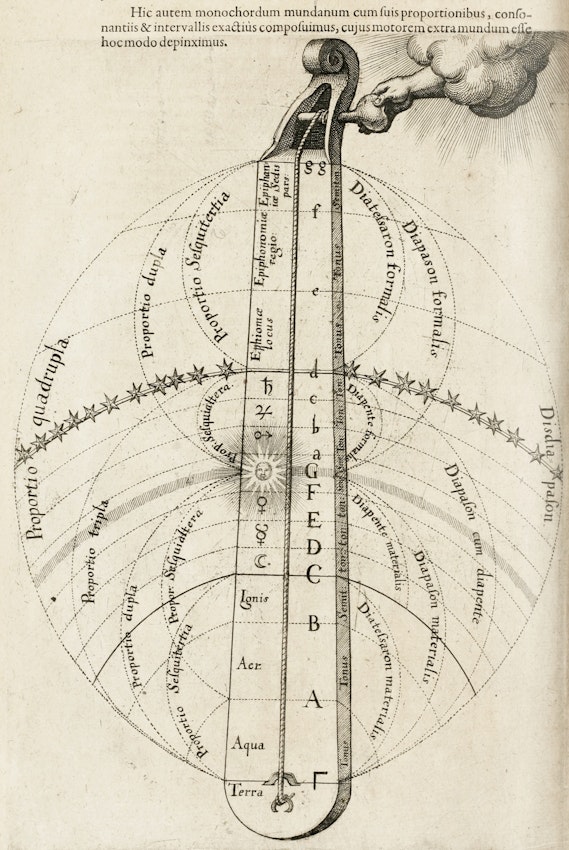
Indecision Is a Skill You Have Been Practicing
You're so good at being mediocre. You practice it day in and day out. Look at you. You're a combination of the habits, the life you have, the situation you're in, everything. It's a cascade of what you've been practicing.
You're probably one of the most consistent and disciplined people I know. You wake up every day and practice this mediocre life that you have. Indecision is a skill and you've been practicing it a lot.
You come up with identities. You come up with diagnoses. You find labels. You find words. You come up with all these reasons. Why? Because you're so special. That's why it didn't work for you.
And here's the thing. You're right. It wasn't going to work for you. Not the way you were running it. Because practice is practice. Your nervous system doesn't know that the thing you were practicing was failure. It just learned the reps and got good at them. This is self-regulation doing its job in the wrong direction. Habit formation, task delay, low self-efficacy, the whole Steel meta-analysis playing out in one life at a time.
The bottom line. You didn't accidentally end up stuck. You built stuck. You crafted a story that justifies stuck. You collected evidence for stuck. You went pro at stuck. And now, when you try to act, the whole weight of that practice is pulling you back into the groove you spent years carving.
This is the part nobody tells you. You're not weak. You're strong in the wrong direction. The willpower is fine. The discipline is fine. The reps went into indecision, so indecision is now your most developed skill. You're an Olympic level athlete of staying where you are.
You didn't fail to build a life. You built a life whose purpose was to prove a story. The story worked. That's why you can't move.
There's good news inside that. If you built it, you can build something else. Same muscle. Different direction. You don't need a new brain. You don't need more discipline. You need to point the discipline you already have at a story you actually want instead of a story you're trying to escape.

The Four Dimensions of Reality and Why You Are Trapped in One
Here's the move nobody in the self-help industry will make, because if they made it, they would put themselves out of business. The knowing doing gap is a dimensional problem dressed up as a discipline problem. Thinking is only one of four dimensions of reality, and you've been stuck in it. That's why you can't get out. Trying to think your way out is the exact reason you can't. You have to start imagining.
Stay with me. This is where the article earns its keep.
There are four dimensions you move through every day, whether you notice them or not. Most people notice one. Here they are.
1. The thinking realm
The dimension the modern world trained you for. School. Exams. Essays. Arguments on the internet. You got rewarded for thinking harder, thinking faster, thinking with better footnotes. By the time you were an adult, thinking was the only dimension you recognized as real. Everything else got filed under woo. The thinking realm is where abstractions live. "Purpose." "Growth." "Discipline." It's where the smart talk trap grows, because abstractions are cheap to manufacture and anticipation-rich to consume. It's also where you're stuck right now.
2. The imaginal realm
The dimension where things are rehearsed, constructed, and test-driven before they touch the material world. Not daydreaming. Not fantasy. The workshop where a thought becomes something you can actually hold. Henry Corbin, the French scholar of Islamic philosophy, called it mundus imaginalis. "This faculty is the imaginative power," he wrote, "the one we must avoid confusing with the imagination that modern man identifies with fantasy and that, according to him, produces only the imaginary." You can read the full essay hosted by the Association des amis de Henry et Stella Corbin. Every mystical tradition on earth independently found this dimension and built maps of it. The modern West threw the maps out and told you the dimension wasn't real. That lie is the reason you can't move.
Some people also call this the paracosmic realm. A paracosm is the working term for a coherent inner world or mental space you can move through and interact with, rather than just picture at arm's length. Same place as the imaginal realm, slightly different entry point. In this post I'm using "imaginal realm" as the main term and flagging "paracosm" here so you can see the lineage the wizard library runs on. Corbin's distinction is the one that matters: the imaginal is not fantasy, it is rehearsal, and the difference is the whole game.

3. The material realm
The things you can touch. The body. The food. The stove. The chair under you right now. The things that have weight and will hurt if you drop them on your foot. Material is where action happens. It's also where consequence lives. You can't escape it and you can't fake it. Every move you actually make has to land here. The imaginal realm is the staging ground for it.
4. The spiritual realm
Call it whatever you're comfortable calling it. The dimension beneath the other three that holds them together. You don't have to believe in anything specific to notice that reality has a floor and that the floor isn't made of atoms. Every wisdom tradition that ever lasted longer than a single generation found this dimension and built rituals around it. The modern West didn't kill it. It just renamed it private and told you to keep it to yourself. For this post, we're not going to lean on this dimension. I mention it so the map is complete and so you can see that the imaginal realm has neighbors. It's not floating alone.
The relationships between the four matter as much as the four themselves. Material gives you weight. Thinking gives you words. Imaginal gives you rehearsal. Spiritual gives you the floor. When all four are operating, you have a working person. When you've been forced to operate inside one, you have what you have right now, which is an extremely articulate human being who can't make himself do the thing.
Four dimensions. You've been living in one of them. The smartest one. The one that gave you gold stars. And because you've been living in one, all four of your problems show up as thinking problems, and you try to solve them by thinking harder, and it never works, because the thing you're trying to do doesn't actually live in the thinking dimension. This is exactly what Sheeran's research measures from the outside. You intend harder, behavior barely moves, d+ = 0.36. From the inside, you feel it as "I know what to do and my hands won't move." Same phenomenon, two vocabularies.
Here's the quiet part. The reason the guru industry can't fix the knowing doing gap is that the guru industry only sells into the thinking dimension. Books, courses, podcasts, frameworks, checklists, acronyms. All of it is thinking-dimension content. You can't use thinking-dimension content to fix a problem whose entire cause is being stuck in the thinking dimension. You can only use it to decorate the cell.
This is what Tyler means by disenchantment. A few words about that term before you nod past it. Disenchantment is the worldview the modern West adopted over the last three hundred years that says the only real things are the things you can weigh on a scale. Everything else, dreams, imagination, stories, meaning, the inner life, got demoted to fluff. The imaginal realm got renamed "just your imagination" and dismissed. The material dimension is now the only one you're allowed to take seriously in polite company. That demotion is the reason the knowing doing gap feels impossible. You've been handed a four dimensional problem and told you're only allowed to use one dimension to solve it.
You can't think your way out of this. The imagination isn't the problem. The imagination is the exit door you were told not to look at.
The core thesis Tyler has been teaching for years is that the real war of the last three centuries has been a war on imagination. The war on imagination, in case you haven't run into the phrase before, is the long cultural effort to convince you that your inner life is decoration, that only measurable things are real, and that the only way to act on the world is through the thinking dimension. It's a war because what it cost you is real. The knowing doing gap you're feeling on a Tuesday morning, with the plan on the desk and your hands refusing to move, is a casualty of it. Corbin spent his life trying to reintroduce the imaginal as a faculty, a real cognitive power, not a synonym for daydreaming. You can read more about the wizard's background and where that thesis came from if you want the lineage.
The fix is to notice that the dimension you were told was magic is actually where your will lives.
The Ant, the Grasshopper, and the Cricket
It reminds me of this old story about the ant and the grasshopper. And the cricket. Let's get into it.
There's a story of this grasshopper and there's an ant. The grasshopper flies around and dances and plays music and sings. All the ants are like, hey buddy, you should probably store up some food for the winter. That's what we're doing. We're kind of a little busy over here storing up food for the winter. You know what. The winter comes and he dies singing his heart out. What a blaze of glory. And the ant survives because he stored up food for the winter.
You know that version, The Ant and the Grasshopper from the Project Gutenberg edition of The Aesop for Children. Everybody knows that version. Aesop taught it to your great grandparents. In the original, the ants ask the grasshopper flat out: "Haven't you stored anything away for the winter? What in the world were you doing all last summer?" And the grasshopper whines: "I didn't have time to store up any food. I was so busy making music that before I knew it the summer was gone." That's almost two and a half thousand years old and it's still the most accurate description of how the knowing doing gap ends. You can find more of these old stories running under the surface of every post on The Wizard Spoke. But here's the thing. That's not you.
You're a third animal entirely. In this story there's another character. There's this thing called a cricket, a little fat one the lizards lick up. And the cricket just likes to hop. Why don't we go see what the cricket is up to.
Hey Cricket, what are you doing? I'm bouncing. Why are you doing that. Well, every time I have a thought and I get an idea, I just want to take action. The guru keeps saying take massive action. So I am. I'm just hopping.
Well, it doesn't really matter, Cricket, because you just keep massive actioning up and down and you're not going anywhere.
The cricket is going to die before the grasshopper and the ant. Because he's going to blow himself out. He's going to be exhausted. He's not going to get anywhere. He's not going to get any food and he's just going to die. Mr. Cricket.
Hey. Hey, Mr. Cricket. Why don't you hop toward the tall grass. Because if you just keep hopping that way, on the other side of that is a place where winter doesn't get too cold and it's nice and there's food all the time. Are you insane, says the cricket. There are lizards in the grass. They'll lick me up.
Yes, Mr. Cricket. There are lizards in the grass. So maybe instead of hating on being the ant all the time, you should go learn a thing or two from them. See if you can actually become strong enough to live like an ant before you go and take these massive risks into the world of lizards.
The plan that has been set before you by others is filled with risk, and your unconscious mind knows it, because you are not stupid.
The plan that has been set before you by others is filled with risk and your unconscious mind knows it, because you're not stupid. You're very smart, and you know the path they've laid out for you will end in disaster, because you're not strong enough, competent enough, or skilled enough to take action on it yet. The knowing doing gap is partly your body refusing to walk into a trap it can smell and you can't. Steel's procrastination research calls this task aversiveness. Your nervous system is running a threat model the self-help industry is not allowed to see.
That's the good news. You're not broken. You're accurate. The reason you won't move is that the plan you've been handed is the cricket plan. Massive action toward a field full of lizards. Your body is smarter than the self-help industry.
How to Actually Close the Gap in One Move
Here's the thing. The one move is simple and it's going to sound too simple. Stop thinking other people's thoughts and start imagining your own. Specifically, imagine the thing you keep failing to do with the abstractions removed. No inspiration voice. No future version of you in a Patagonia vest. The thing itself. With smells. With weight. With the chair you'll sit in while you do it. With the specific moment where it will be boring and you'll want to quit. That whole process of stripping the abstraction down to something a body can hold is the core methodology of the wizard library, and HypnoChat was built to do exactly that on demand.
The behavioral science has a name for a piece of this. Gollwitzer called it an implementation intention. If-then planning. "If situation X happens, then I will perform action Y." Sheeran and Gollwitzer put it plainly: the best predictor of whether people will actually do what they say they'll do is not intention strength but whether they have formed a concrete plan specifying when, where, and how they will act. The effect size across 94 studies was d = 0.65, which in behavioral science terms is huge. That's the lab version of what we're about to do. The imaginal-realm version goes deeper than the lab form, because it attaches the if-then plan to a rehearsed sensory scene instead of a dry logical rule.
Removing abstractions is the whole methodology. Every guru sells inside the abstraction, because abstractions are where the anticipation lives. "Find your purpose." "Build your dream life." "Become your best self." None of those phrases have weight. They can't be touched. They can't be dropped on your foot. They're thoughts you're meant to buy, feel anticipation for, and file away. Tyler's method takes the abstraction apart and rebuilds it as something your body can actually hold, then ties it to an environmental cue the way Gollwitzer ties a plan to a trigger.
Worked example 1: "I need to start my business"
You say, I need to start my business. Abstraction. Not a thing a body can do. Remove the abstraction. What's the first physical action, using only your hands and the objects in this room, that moves the business from idea to existence. Maybe it's opening a text document and typing one sentence. Maybe it's writing one name on a piece of paper. Maybe it's walking to the mailbox. Something you can film with a phone camera. Something with atoms in it.
Now wrap it in an if-then plan. "If I sit down with my morning coffee, then I open the doc and type one sentence about the offer." That's a Gollwitzer implementation intention bolted to a sensory rehearsal. The cue is the coffee, which is already a daily ritual, which means self-regulation doesn't have to invent a new trigger. The action is concrete, small, and filmable. Your chances of actually doing it just jumped by the same d = 0.65 the 94-study meta-analysis reported.
That move lives in the imaginal dimension first. You have to see it there before your body will do it in the material dimension. The imaginal realm is where you go to rehearse reality concretely enough that the material dimension will accept the move. You thought imagination was the opposite of action. It's actually the door to it.
Worked example 2: "I need to get in shape"
Same move. "Get in shape" is an abstraction so vague it's practically a prayer. Remove it. What is the first physical action you can film with a phone. Not a program. Not a plan. An action. One pushup on the carpet next to your bed, done in pajamas, before you even stand up. Imagine the carpet texture. Imagine the shoulder stretch. Imagine the specific second where your arms are shaking and you want to quit. Imagine yourself finishing anyway because the thing was so small there was no reason not to. Run that scene in the imaginal dimension until it has the weight of a memory. Then attach the if-then cue: "If my feet touch the floor in the morning, then I drop and do one pushup before I stand up." Then get out of bed and do the one pushup. That's it. The gap closes because there was nothing inside it. "Get in shape" was made of nothing, and a body can't act on nothing. One pushup on a carpet, wired to the sensation of feet on floor, is something, and a body will act on something every time.
Notice what both examples have in common. The abstraction was the whole problem. "Start the business" was eating up every attempt to move because the phrase itself had no body. "Get in shape" had the same issue. Both were thoughts you bought, dressed in verb costumes, pretending to be instructions. Your nervous system runs on specific physical detail. Give it a costume, it stalls. Give it a scene with weight, chair, keyboard, the texture of the carpet, and it will move. The minute you build that detail in the imaginal realm, the material move becomes available. The word is available, which sits on the other side of motivation entirely. Motivation is the feeling you reach for while the thing is still an abstraction. Availability is what happens once the abstraction is gone and the next move is just sitting there waiting for your hands.
This is also why people who try the move and fail usually fail at the same spot. They skip the concrete imagining and try to jump straight from the abstraction to the action. They tell themselves "just do it" and willpower the thing. It works once. Maybe twice. Then the body notices the abstraction never got dismantled and it refuses to cooperate again. You can't willpower your way past a routing error. You have to fix the routing. The routing is the imaginal rehearsal plus the if-then cue. Skip either half, and you're back in the thinking dimension, decorating the cell.
Here's the loop you've been running. Thinking dimension generates an abstraction ("start the business"). You try to act on the abstraction. Your body refuses, because bodies don't act on abstractions. You try to think harder. The abstraction gets more abstract. You buy a course about abstractions. Loop forever. This is the exact feedback loop Pfeffer and Sutton called the smart talk trap. They caught it in Fortune 500 boardrooms. You're running it in your kitchen.
Imagination is the door to action. The modern world locked that door and told you there was nothing on the other side.
Now the new loop. Thinking dimension generates an abstraction. You notice the abstraction and refuse to act on it until you strip it down. You move into the imaginal dimension. You build a specific scene in which you do the next small physical thing. Not "start the business." "Type one sentence into a Google Doc while sitting in this chair with my coffee on the left side of the laptop." You run the scene until it has the weight of a memory. Then you attach the if-then cue so the environment triggers the action without you having to decide. Then your body does it, because as far as your body is concerned, it already did it once and the cue just pulled the trigger. Nothing is being forced. Nothing is being willpower-ed. The move is available because the imaginal rehearsal made it available and the implementation intention routed it.
This is concrete imagining, and it's the opposite of positive thinking. Positive thinking says "I'll become a person who does this thing." Concrete imagining says "I can see the keyboard. I can see my thumb. I can see the cursor. I can see the first sentence. I can see the moment where I want to quit and how I handle that moment." Fantasy sands off the rough parts. Concrete imagining insists on them. This is also, not coincidentally, exactly what Corbin meant by the imaginal faculty: rehearsal with weight, not picture-making.
That's the one move. You do it once in the dimension nobody told you was real, then you route it with an if-then cue, then you do it in the world. The knowing doing gap closes because you finally stopped using the wrong tool on it.
Why Productivity Tools Can't Touch This
You've tried the apps. You bought the planner. You did the morning routine with the cold shower and the lemon water and the gratitude journal and the three things you're thankful for written in a leather notebook. Nothing moved. That's a worldview failure, and the worldview is the room these tools were built in. Productivity tools, therapy, and motivation hacks all operate in the thinking dimension, and the thing you're trying to fix lives one dimension over.
You've done the tools. Time blocking, Pomodoros, habit trackers, morning routines, a cold shower and a notebook and three things you're grateful for and a glass of water with lemon in it. You know what happened. Nothing happened. You've been bringing a calendar to a knife fight, and the knife is in a different room.
Look, therapy is fine. Therapy is even good at certain things. I'm not telling you to cancel it. I'm telling you that therapy is the high priesthood of the thinking dimension. It's a room where two people sit and think together about why you can't do the thing. If the thing you can't do lives in a dimension neither of you is allowed to acknowledge, the conversation goes in circles for years. That's why you left your last therapist feeling articulate and still stuck. Sheeran would call the outcome unchanged behavior. Aristotle would call it akrasia with extra credentials.
Here's the thing. Motivation isn't the gap either. You've got plenty of motivation. You just channeled it into proving a story instead of acting on a life. Motivation without imagination is engine noise. That's the piece nobody in the productivity industry will concede, because conceding it collapses their whole product line.
What does this mean. It means you inherited a worldview in which the imaginal dimension got demoted to fluff, the spiritual dimension got called superstition, and the material dimension got worshipped like it was the only thing on the menu. That worldview is called materialism. Materialism is the idea that the only real stuff is the stuff you can weigh. Everything else, including your inner life, is just atoms bouncing. If you accept that, you can't use the imaginal dimension to solve a problem, because according to materialism the imaginal dimension doesn't exist. So your only tool is thinking. And thinking alone can't close the gap. That's math, not moral failure. The d+ = 0.36 number is what it looks like when the math catches up to the metaphysics.
33+
Video testimonials from people who came through Ask a Wizard stuck on a specific move
Ask a Wizard proof archive, 2026
Check this out. You've got a worldview that won't let you use the tool you need. Here's the upside. Worldviews aren't permanent. They're thoughts you bought. Which means you can return them. The Harvard Study of Adult Development has been telling us for 87 years that the thing that matters most is relationships, and we've been spending $16.5 billion a year trying to outwit that finding. The knowing has been solved. The doing is still open. That ratio is the whole business opportunity of the self-improvement industry, and also the whole tragedy of it.
What to Do Tonight
Here's the thing. The whole post collapses into one short instruction. Tonight, before you sleep, pick the one thing you can't make yourself do. The real one. Not the one that sounds good in the article. The one that has been haunting you for a year.
Don't make a plan. Don't write goals. Don't buy another book. Sit somewhere quiet for five minutes and do the following. Imagine, in physical detail, the very next action. Not the outcome. The action. Where your hands are. What's on the desk. What the room smells like. The exact first sentence you type or the exact first phone number you dial. The specific moment you'll want to quit and the very specific thing you'll do instead of quitting. Keep imagining until the scene has weight. You'll know when it has weight, because your body will want to do it before you tell it to.
Then write it as an if-then sentence. Gollwitzer's format. "If [specific cue], then I will [specific physical action]." One sentence. Tape it somewhere the cue lives. Coffee mug. Bathroom mirror. Monitor. That's it. You've now built the thing the 94-study meta-analysis said has a d = 0.65 effect on closing the intention-behavior gap. It took you two minutes. It cost nothing.
Then get up and do the thing when the cue fires. Not the whole thing. The thing you imagined. That exact action. Thirty seconds of it is enough. The goal is the transfer, from the imaginal dimension to the material one, without running it through another thinking loop first.
The first time you do this you're going to feel like an idiot. The second time you're going to feel like a liar. By the fifth time you're going to realize that the whole knowing doing gap was a routing error. The thing was never hard. It was just addressed to the wrong dimension. Sheeran's inclined abstainers, the entire population the research names, are one rehearsal and one cue away from being doers.
If the scene won't come into focus, that's a signal. It means the thing you think you can't do is actually an abstraction stacked on top of an abstraction, and you have no idea what the concrete next action even is. That's the moment to go to HypnoChat and describe what you're stuck on in your own words. Not guru words. Your words. The AI is trained to strip the abstractions off what you say until something your body can hold drops out of the bottom. That's the whole trick. There's no catch, no pitch, no credit card. Tyler gave the whole method away free because information was never the missing piece. The Harvard Study proved that 87 years ago and $16.5 billion in self-improvement spending keeps proving it every year.
You tell me the thing you can't make yourself do. You leave doing it. That's the whole promise. The mechanism is dimensional, not motivational.
If you've read this far, you already know the move. If you want the rest of the wizard's tower, the front door is here. You already know the diagnosis was wrong. You already know every course you bought was a receipt for a thing you didn't do. You already know your will is fine, your body is sane, and the problem was the room you were trying to solve it in. Pfeffer said it. Sheeran measured it. Aristotle named it. Dostoyevsky wrote your obituary in 1864 and got it wrong by exactly the amount you're about to prove wrong tonight.
Go. Imagine the thing. Concretely. With weight. Write the if-then. Then walk across the gap. It was a step the whole time. You just couldn't see the floor from where you were standing.